Thursday, June 05, 2008

Charles Dickens, The Mystery of Edwin Drood

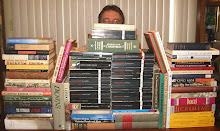
I don't know if this ever happens to you, but I've been in a bit of a reading funk for the past few weeks. I want to read something, but nothing feels right ... I begin a dozen different books, hoping that something with sustain my attention, but nothing does ... Every so often I get into a funk like that, and it usually takes that one particular book (and a few weeks of false starts) to get me back on track. This time, Edwin Drood was just that book. Maybe it was the unsolved crime and detective aspect of the novel that grabbed me, appealing to my noir fiction guilty pleasure. Regardless, my Summer Reading 2008 kicks off with The Mystery of Edwin Drood.

This was the final novel Dickens wrote, left incomplete because he died mid-way through the composition. Although he left a few minor notes and a couple of fragments that offer clues to how he might have continued the narrative, Drood is the best example of fiction based on an unsolved crime simply because it is unsolveable: Which minor characters are ultimately important? Is the title character even really dead? Who has the best motive for committing the crime? Which details are really red herrings? We'll never know, and although legions of "Droodians" over the decades have tried to speculate on the answers, the solution (to paraphrase Hamlet) is silence.

What I like about this novel is Dickens's command of his material at this point. He was failing in health, he was exhausted from public readings, and he was experiencing difficulty with his creative process ... yet he was able to muster the energy and will to create a novel rich in imagery, well-sustained in tone, and linear in plot. What it lacks in typical Dickensian touches (rambling subplots, grotesque characters, biting social commentary, etc.) it more than makes up for as the first half of what might have been his crowning achievement as an author.

If you enjoy detective fiction, crime fiction, and mysteries, you'll enjoy the unfinished novel that is The Mystery of Edwin Drood!

Saturday, April 12, 2008


William Makepeace Thackeray, The History of Pendennis

My reading lately hasn't been terribly engaging. In school, I've been in the process of re-reading several books that I've either read before (The Island of the Blue Dolphins, A Tale of Two Cities, and Great Expectations) or taught before (A Portrait of the Artist as a Young Man, White Noise), and I've found myself more often than not simply gathering books to read in the upcoming months as school begins to wind down.

One of the choice acquisitions I've made in the past few weeks is a first edition of Thackeray's The History of Pendennis, originally published in 1850 by Bradbury & Evans (Dickens's long-time publisher). I scored a copy of this two-volume set, in very good condition, for a mere $14.00 thru Powell's Books on Portland, Oregon. The novel is often compared with Dickens's David Copperfield as a prime example of the Victorian-era bildungsroman, and I've wanted to read the novel since encountering references to it last year in my Dickens research. Since the novel is currently out-of-print, I did some online hunting, stumbled onto this edition ... and bought it -- which is officially the oldest book I own!

I hope to begin reading it as my work load lessens over the next month.

Sunday, March 16, 2008

Patti Sherlock, Letters From Wolfie

I wasn't too impressed with this novel, which is the latest work I introduced to my freshmen students. Despite its attempts to question the nature of "sacrifice, loyalty, and the complex meaning of patriotism" in a story set amid the backdrop of the Vietnam conflict, the book was a bit too schmaltzy and melodramatic for my taste. Even my students found it pretty darn'd mediocre.

About the novel: It's 1969, and Mark Cantrell has decided to donate his loveable malamute/German shepherd to the U.S. Army as part of its canine program devoted to training dogs to be scout dogs, sentry dogs, etc. His older brother Danny has recently gone overseas to fight in Vietnam, and when Mark learns that military dogs are considered mere equipment, he petitions the government on behalf of all dogs that they be returned stateside like the soldiers they protect. Along the way, we witness his relationship with his veteran father and his friendship with a "peacenik" girl, Claire, whose brother is a draft dodger ... and lots of other stuff in this lackluster effort.

The problem with this novel is that it's way too cluttered ... My impression is that the author had a good story to tell, but also wanted to follow the typical YA formula -- you gotta have a conflict between your teen protagonist and his parent, you gotta have a love interest, you gotta have a burgeoning relationship with a maverick teacher, you gotta have sibling rivalry, you gotta have a character who changes and learns something about himself via a big, climactic event, blah blah blah ... and by including all the requisite YA trappings, Sherlock leaves us with a hodge-podge of cliched YA storylines that fight with each other for narrative space while, ultimately, all the reader really cares about is ... Mark and Wolfie.

Additionally, I was bothered by the female author's handling of the male point-of-view, which she doesn't convey effectively. If handled well, it can be believeable and downright entertaining (like Cynthia DeFelice's handling of Joe Pedersen in Under The Same Sky). But in this particular instance? It just doesn't work.

Bottom line: Don't waste your time.

Sunday, February 17, 2008


Herman Melville, Moby-Dick, or The Whale

First, a story:

Back when I was an undergrad student in Dr. Gus Kolich's American Literature class at Saint Xavier University, we were assigned to read Moby-Dick during our week of Spring Break. Not being a participant in the usual Malibu Beach spring break tomfoolery, I stayed home, choosing instead to take the train to the Loop and make a solitary visit to the Art Institute of Chicago with sketchbooks and bottled water in my carpetbag ... including my copy of the Norton Critical Edition of Moby-Dick. Stopping for lunch on a glorious spring afternoon at the McDonald's on Randolph and Dearborn, I read for an hour, whereupon I resumed the rest of my day's excursion.

It wasn't until I returned home that night that I realized -- "Oh no! I left my copy of the book at McDonald's!"

The next morning, hoping for a slim chance of recovering my castaway (what are the chances of finding a lost item in a downtown fast food establishment the next day!?), I returned to the same McDonald's assuming it was a futile effort, but a rescue nonetheless worthwhile. And lo and behold! When I walked in the doors, there lay my very own Norton Critical Edition of Moby-Dick on the windowside counter, primly awaiting its owner! Apparently NO one was gonna steal that book! LOL

And over the last twenty years or so, I've taught selections of the novel to my American Literature students. Granted, it's not a book that in its entirety goes over well with high school kids ... but in selected chapters, it's a palatable and engaging read.

So when the Biblioholics Anonymous decided to read this novel for their March selection, I jumped at the chance to re-read this book again ... to re-read the whole thing!

More than ever, I am reminded of just what an underrated book this is. Completely panned in Melville's lifetime, and today often viewed by readers (or, should I say, people who haven't read it but merely think they know what it's about) as a stodgey classic that elicits boredom, nothing could be farther from the truth! Moby-Dick is a celebration of one of the most important and forgotten industries of 19th Century America. Encyclopedic in its scope, biblical in its sublimity, subtle in its humor, and engaging in its spinning of a nautical yarn, Melville's masterpiece remains relevant over a century and a half later -- the megalomaniac Captain Ahab has a counterpart in contemporary politics, the Pequod remains a microcosm of American society, and many of narrator Ishmael's philosophical musings either sparkle with meaning or reinforce the ambiguity with which we all must share in our existence. This time through, I noticed some of its politically incorrect observations regarding people of Asian and African-American heritage; I see the intricacy of the chapter ordering, which I'd never noticed before; and the deliberate ambiguity that Melville fosters throughout the narrative in terms of how we should perceive the world around us -- these are the benefits of re-reading a major literary work twenty years later!

Don't let any reductionist tell you: "It's about a crazy guy chasing a whale."

It's so much more ... and it's brilliant!

Enjoy!

Tuesday, February 12, 2008


Claire Tomalin, The Invisible Woman: The Story of Nelly Ternan and Charles Dickens

I scored a copy of this book, used, about a month ago. Probably not something of much interest to the general reader, it's definitely a good book for anyone interested in learning more about the woman who inspired the single most popular English writer of the 19th Century to reinvent himself in middle-age, along the way fracturing his family and friendships, his business partnerships, and his twenty-four year marriage.

Ellen ("Nelly") Ternan was an eighteen-year-old actress of stunning beauty when she met the forty-five-year-old Dickens, and the ensuing relationship caused a literary scandal and a public relations nightmare for a writer once beloved by his readers for his stories of hearth and home. Not to be ruined by the scandal, he rebounded with two blockbuster serial publications: A Tale of Two Cities and Great Expectations. Nelly and Dickens continued their relationship for the next thirteen years until he died in 1870. She eventually remarried and lived a relatively normal life, barely ever mentioning her relationship with Dickens, and died in 1913.

Tomalin's book is considered a landmark of biography because of its success in fashioning a life story from such scant material. Indeed, while she and Dickens were together the author and his loyal friends took great pains to conceal her identity in coded terms; Dickens's best friend and biographer, John Forster, never even mentions Nelly in his biography of Boz. Which is probably why I felt that the strengths of Tomalin's book lie in its depictions of pre- and post-Dickens-era Nelly. With so little to go on during those thirteen years, Tomalin essentially rehashes the usual biographical information on Dickens himself (to which I would direct the reader to Fred Kaplin, Edgar Johnson, and Peter Ackroyd)... but if you want to read about women of the theater in the early 19th Century, the circumstances leading up to the scandalous relationship, and the way in which a woman begins life anew following her lover's death without hardly a glance back, this is a pretty good book.

Saturday, February 09, 2008


Chris Crowe, Mississippi Trial, 1955

In my continuing search for good YA novels that I can read with my freshman students, Mississippi Trial, 1955 came highly recommended by a colleague. I finally got around to reading it and, truth be told, this is a fantastic book that has something for everyone.

A piece of historical fiction set in the late-1940s thru the mid-1950s, it essentially tells the story of Emmett Till, a fourteen-year-old Chicago boy who went to visit relatives in Mississippi and became the victim of a heinous racially charged murder that sparked the Civil Rights movement. The novel is told from the point-of-view of fictional character Hiram Hillburn, who returns to visit his elderly grandfather in the summer of 1955. The South is not exactly as he remembers it when he lived with Grandpa seven years earlier; Hiram is now aware of the racial tensions and Jim Crow mentality that are part of Delta culture. And when he becomes embroiled in Emmett's kidnapping, murder, and the subsequent trial, Hiram once and for all glimpses what his father has long called the "ugly side" of the South.

But what makes this book so engaging on different levels is the story, which also explores father/son relationships, child abuse, homophobia, etc. And, to be honest, the trial itself is grippingly recounted with the expert pacing of Harper Lee's To Kill A Mockingbird (obviously one of the novel's influences). Overall, Crowe maintains excellent control of his characterization and storytelling, balancing suspense with poignancy, and he gives the reader a book that is both thought-provoking and simply a "good read."

Enjoy!

Thursday, January 24, 2008


Charles Dickens, Great Expectations

I have a "history" with this book that goes back over twenty years ...

When I was in my third year of college, my mother was diagnosed with cancer. Despite aggressive chemotheraphy treatments, in February, 1987 she fell into a coma and there she stayed for about two weeks until, one morning, she died.

At that time, I was in the process of reading Great Expectations (a cheap Bantam edition, as I recall) for the first time ... and I never finished it. Something about the book ... its cover, its story, maybe even its smell ... something about that book always struck me as distasteful, and although I've made a couple of feeble attempts to read the book since then, I've never been able to do it.

So finally finishing this book -- for my spring Newberry seminar -- is an achievement for me. It's a book that is fraught with personal feelings that I have had to overcome. Interestingly, although I finished the book today, it's taken me months of hammering away at its chapters to finally get through it.

When everything is said and done, I must admit that it's one of my least favorite Dickens novels. Apart from the great opening chapter and the delightful descriptions of Miss Havisham, I found it one of the darkest, most humorless books in the Dickens canon. Also, I suppose I'm used to Dickens giving his readers subplots, and here is the only novel written by Boz that has no subplot whatsoever (which is probably why we subject high school freshmen to it). In the villain Orlick we get an antagonist who is a genuine physical threat to protagonist Pip -- not the grotesquely caricatured villains of Quilp or Uriah Heep or even Mr. Carker, but a murderous criminal (virtually harkening back to Bill Sikes in Oliver Twist, but even Sikes I recall having a somewhat humorous treatment in his exchanges with Fagin). And although Dickens has given us melodramatic death scenes in the past (can anyone say "Little Nell" or "Dora Spenlow"??), I wonder now how I would have gotten through the death scene in Great Expectations had I finished the book back in '87.

Well, at least I can finally say I've read it ...

Sunday, January 20, 2008


Ray Bradbury, Farewell Summer

When was the last time you read a book in one sitting, with a smile on your face the whole time?

Farewell Summer is Bradbury's sequel to 1957's Dandelion Wine, a wonderful novel that captures the excitement of summer vacation when you're a little kid growing up in a small Midwest town in 1928. Life consists of little more than friends, pretend intrigues, lightning bugs, and the delicious feel of a summer breeze through your window. And while Dandelion Wine focuses on a "slice of life" with the residents of Green Town, Illinois (based on Bradbury's home town of Waukegan), much of the story follows the summer adventures of twelve-year-old Douglas Spaulding, his little brother Tom, and their buddies.

In Farewell Summer, published almost fifty years after the first novel, Bradbury continues the story of Doug et al, now during a brief Indian summer in early October, 1929. Doug and his buddies engage in a "war" with the adults of the town, a war that becomes a metaphor for the struggle over control one feels as a teen. The stealing of chess pieces from the old men who play chess in the park, the setting-off of firecrackers in the town hall bell tower, and the awakening thrill of watching a girl and an ice cream cone all come together to capture the transitions we all make from giddy summer to the sober realities of autumn.

My guess: You will read this book in one sitting, smiling the whole time. : )

Sunday, January 06, 2008


Happy Twelfth Night!

" Twelfth Night is a holiday in some branches of Christianity marking the coming of the Epiphany, concluding the Twelve Days of Christmas, and is defined by the Oxford English Dictionary as 'the evening of the fifth of January, preceding Twelfth Day, the eve of the Epiphany, formerly the last day of the Christmas festivities and observed as a time of merrymaking'.

"The celebration of Epiphany, the adoration of the Magi, is marked in some cultures by the exchange of gifts, and Twelfth Night, as the eve or vigil of Epiphany, takes on a similar significance to Christmas Eve.

"In some traditions it is taken to mean the evening of the Twelfth Day itself, the sixth of January. This apparent difference has arisen probably due to the old custom of treating sunset as the beginning of the following day. Therefore, according to confluent ancient traditions of the tides of time, Twelfth Night would have been celebrated as occurring on the twelfth day as different to the present custom of celebrating the day prior." [...]

Here is the Wikipedia citation from which this comes.

Here is the Shakespeare connection.

And here is why you should take down your Christmas decorations by tonight.

Enjoy!!

Saturday, January 05, 2008


Richard Matheson, I Am Legend

What a great book to start a new year of reading!

I Am Legend is a novella originally published in 1954 as a piece of science fiction (since the story takes place in the not-so-distant 1976). Today it is hailed as a major contribution to the horror genre. Indeed, the whole time I was reading this, I was reminded of the thrill you get when you are completely immersed in a good Stephen King or Clive Barker story!

The story itself focuses on Robert Neville, the last man on earth. A worldwide holocaust has transformed all surviving humans into vampires -- all, that is, except for Neville ... and the story follows him as he nightly seals himself into a house and fights off the vampires that walk on the roof, pound on the doors, and bellow his name! When he ventures outside during the daytime, he seeks their comatose bodies to burn, and one of the most gripping scenes in the book begins when Neville realizes -- a bit too late -- that his wristwatch has stopped!

But more than merely a page-turner, I Am Legend is also a fascinating take on the traditional vampire story in terms of offering a scientific explanation for vampirism (even going so far as to suggest that the Black Plague of the Middle Ages may have been connected to it) and a speculation on why certain aspects of the legend exist in the first place (e.g., if a Jewish person becomes a vampire, would a cross have the same punishing effect on it?).

To be honest, I don't remember much about Omega Man, the 1971 film that was based on the Matheson story, nor have I seen the newly released Will Smith film. But as a piece of fiction, I Am Legend is a thrilling read!

* This paperback edition includes ten additional short stories by Richard Matheson.

Wednesday, January 02, 2008


Bill Martin, Listening to the Future: The Time of Progressive Rock: 1968 - 1978

This is one of those books I'm drawn to over and over again. I read it almost ten years ago, when it was first published, and the author -- an Associate Professor of Marxist Philosophy at DePaul University and a musician who plays a choice Rickenbacher bass -- was interviewed about the book in a Chicago Sun-Times article. Being a lifelong fan and collector of Prog Rock, I devoured the book ... and have found myself returning to it countless times over the years!

When I was a kid I would travel by CTA bus down 79th Street to visit my Aunt Gene, who lived in Justice, IL. While she and my Mom would sit in the kitchen chatting for hours, I'd sit in the living room playing my Aunt's classical music albums, which gave me my first exposure to complex musical arrangements, "movements," and other such organizational patterns in music.

Later in high school, I "discovered" the music of such bands as King Crimson, Yes, ELP, Jethro Tull, and early Genesis -- bands that revelled in long, self-indulgent musical soundscapes, often using exotic instruments (anyone remember the Mellotron? LOL) to convey a medieval mood. Even later, my affinity for Prog fueled my interest in jazz (especially Miles and Monk and 'Trane), and to this day I sorta retain a soft spot for jam bands like Phish. Maybe it's the Hippie in me (I was born in 1966, after all ... and dammit, I had the Batman bedsheets to prove it!)

Anyways, Martin's Listening to the Future is a fantastic read if Prog is your thing, especially when he gets into his year-by-year guided discography that illustrates the growth and development of progressive rock from its earliest hints in the Beatles's Rubber Soul to its heyday in the early '70s -- Mike Oldfield's Tubular Bells (which is today remembered as the "sountrack" for The Exorcist), ELP's Brain Salad Surgery, the Mahavishnu Orchestra's Birds of Fire, Yes's Tales from Topographic Oceans, and King Crimson's brilliant Lark's Tongues in Aspic -- to its gradual dissipation and influence on such bands as The Clash and Husker Du.

For Chistmas, I received a CD of Caravan's In the Land of Grey and Pink -- a choice piece of musicianship from the prog era -- and again I return to Bill Martin's book to celebrate a time in rock history when experimentation was king ... and suites were sweet.

Monday, December 31, 2007


Jasper Fforde, The Big Over Easy

This was a fun book! Having read Fforde's clever The Eyre Affair some time ago, I was already familiar with his unique ouvre when the Biblioholics Anonymous chose this for our January, 2008 book. However, since I wasn't a huge fan of The Eyre Affair, I didn't exactly know what to expect with this book.

Much to my delight, it was better than I expected! The Big Over Easy is a crime thriller that involves nursery rhyme characters. Detective Jack Spratt and his sidekick, Mary Mary, are called upon to investigate the mysterious murder of Humpty Dumpty, a hard-drinking womanizer with a jail record and a penchant for getting involved in a variety of criminal activity. All the while Jack and Mary are conducting the investigation, Friedland Chymes -- dashing detective and darling of the media -- tries to wrest control of the Dumpty investigation to further his own career in the spotlight. With cameos by countless nursery rhyme characters, like Solomon Grundy (the richest man in the town of Reading), Mrs. Hubbard (a wacky landlady with a lot of dogs), Georgie Porgie (a.k.a. Giorgio Porgia, former mob kingpin), and dozens of others, it's an entertaining glimpse into the world of criminal investigation ... not to mention a brilliant satire on crime fiction, the role of the press, the problems facing federally funded programs, etc.

But the best part: the "crime solving" portion of the novel is downright gripping! Fforde throws in plenty of neat plot twists and just enough red herrings to make this an engaging piece of crime fiction ... one that just happens to use Mother Goose characters. While the whole book sparkles with charm and Brit wit, the second half of the novel will keep you turning pages to find out the killer's identity ... and to see how the various other conflicts are resolved.

This was a wonderful book with which to finish 2007. Enjoy, and see you next year!


Saturday, December 29, 2007


William Shakespeare, The Comedy of Errors

You may recall that around this time each year I get together with the "Obscure Shakespeare Play Reading Group," consisting of a few former A.P. students of mine who are now out of college, pursuing their careers, and who simply want to gather for a lunch at a Brookfield pub, catch up on what's new in our lives, and chat about -- among various other things -- a Shakespeare play that few people ever read. In the past, we've discussed Coriolanus, The Two Noble Kinsmen, King John, and one year even branched out to read Dante's entire Divina Commedia. For this time around, we chose a play that I've read before, but one that was fun to re-visit: The Comedy of Errors.

The play itself is amusing from sort of a Three's Company point-of-view -- mistaken identities, bawdy humour related to the anatomy, slapstick, etc. There's nothing terribly cerebral about this particular play, which is based on a comedy by the Roman playwright Plautus entitled The Brothers Menaechmus. Two sets of identical twins, each of a different social class, get mistaken for each other ... and chaos ensues! This is one of the earliest examples of Shakespeare's uncanny ability to take basic source material (i.e., the Plautus play) and make a silk purse of a sow's ear. He adds minor characters, plot twists, puns and wordplay galore, all the while maintaining the three Unities of Time, Place, and Action as a reverent nod to the ancients. An obscure play by Will, certainly, but hardly an inferior work.

As always, it will be a pleasure to see Al (cinephile extraordinaire who runs an English Department for a school within the CPS system), Mike (the mad Bohemian who travels cross-country Kerouacstyle and who, I learned, broke a finger recently ... gotta hear that story), and Ben (glorious jazzpunkman of academia who has lived and studied in China for the past year and a half)!

An impressive group, to which newcomers are always cordially welcomed. : )
"1000 Books You Must Read Before You Die"

Here's a pretty insane list of books that, as the title suggests, we all had better get to readin' before we give up the ghost.

Book lists always intrigue me. Rather than being a comprehensive representation of what they claim to list, they reveal more about the lister than the subject matter ... his/her interests and bibiobiases.

Anyways, this list has a few good titles on it. I've read quite a few ... I've begun and never finished quite a few ... some I've never even heard of ... and some are just plain silly. But hey, it's a list.

Friday, December 28, 2007


Erik Davis, Led Zeppelin IV (331/3 Series - Volume 17)

This is now the second book I've read that examines Zep's "four symbols" album, and in many ways this one is more enjoyable. Focusing specifically on an analysis of the songs in terms of their lyrics and arrangements, Davis enhances the impact of his analysis by relating the music to Led Zeppelin's place within 1970s rock as well as their supposed dabblings in the occult. Further, by identifying a persona within Plant's lyrics whom we can follow from song to song (a persona Davis names "Percy," Robert Plant's nickname), the author demonstrates (with varying degrees of persuasion) the physical and spiritual movement that takes the listener from the opening accapella verse of "Black Dog" to the concluding chords of "When The Levee Breaks."

One of Davis's early discussions in the book, however, addresses the modern movement toward digital music, which has been the death knell for the physicality of vinyl albums. Hence, the ways in which a listener approaches the sequencing of the music, not to mention the album art, the inner fold of the album design, and the sleeve of lyrics, are all examined and celebrated by Davis for their contributions to the overall mystique of this musical masterpiece.

And Davis devotes moments to the ephemera of the album as well: the ten-second odd musical strains that immediately preceed "Black Dog"; the sorts of "messages" that you hear when playing "Stairway to Heaven" backward; the use of Sandy Denny as backup vocalist on "The Battle For Evermore" and the band's nods to Joni Mitchell and Memphis Minnie throughout the album; "Rock and Roll" as punk Zeppelin, and the experimental nature of the performance and mix of "Four Sticks." And while Davis occasionally veers into the downright obscure when analyzing the songs (e.g., his examination of "Stairway To Heaven" is itself a 35-page piece of rock scholarship), his writing is always engaging.

This was a fun chance to re-visit -- again -- one of the greatest albums from the days of my youth.

Wednesday, December 26, 2007


Michael T. Fournier, Double Nickles on the Dime (331/3 Series - Volume 45)

In my younger and more vulnerable years, I was in a band. I played bass, and occasionally drums. We fancied ourselves a band with a punk ethos. In retrospect, we were suburban dorks ... but we had fun. And during this time I accumulated an impressive collection of punk albums. One of my favorites, and the greatest album of all time (in my humble opinion), is Double Nickles on the Dime, a double album released in 1984 by the Minutemen, a punk trio out of San Pedro, California. Containing a vast forty-three songs (few of them exceeding 90 seconds) that span the genres of punk, jazz, funk, flamenco, country, and even avant garde, the album is unlike anything you've ever heard before -- and the band flat-out rocks!

Anyways, this small volume by Fournier is a song-by-song analysis of the album. Fournier draws upon interviews with bassist Mike Watt and countless others who worked with the Minutemen during their brief tenure in the early 'Eighties (before guitarist D. Boon was killed in an automobile accident around Christmas, 1985), weaving together stories of how the songs were sequenced for the album, the various literary and musical influences on the band at that time, and amusing anecdotes associated with the composition and recording of the music. More importantly, Fournier is obviously in love with the music, and the tenderness with which he analyzes the songs' lyrics, arrangements, etc. make this a fun read for anyone who is familiar with this album ... and a wonderful introduction to the Minutemen for those to whom this band remains unknown.

See more of the outstanding 331/3 series published by Continuum.

Visit the Minutemen's archives at Mike Watt's Hoot Page, or check out the Watt from Pedro Show podcasts (where the December 8, 2007 show was devoted to an interview with Fournier).

And a great documentary to check out is We Jam Ecomo: The Story of the Minutemen (2005), directed by Tim Irwin. It includes interview footage and archival concert footage of the Minutemen in action. Righteous stuff!

Saturday, December 22, 2007


Larry Niven, Ringworld

I continue to work my way through some of the "classics" of sci-fi, and Larry Niven's Ringworld is often hailed as a monument of "hard" science-fiction, i.e. its central concepts are rooted in the exploration of scientific fact, like Arthur C. Clarke's Rendezvous with Rama (cf. my BiblioBlog entry from December, 2004) or Hal Clement's Mission of Gravity. This was a pretty solid book, most of which I knocked out while waiting for my van to get serviced.

Ringworld is the story of Louis Wu who, along with Teela Brown and two alien creatures (Nessus and Speaker-To-Animals, two species that are unique to Niven's Ringworld universe), travels to a distant star that is encircled by a string of enormous man-made panels -- a ringworld -- each one a populated piece of terrain (think of Saturn encircled by a series of ceramic tiles, each one facing the surface of the planet ... now picture the entire circle of tiles rotating around the planet, generating a gravitational force all its own). The panels of the ringworld are vast: they have mountains, deserts, bodies of water, forests, etc. and the novel recounts the voyage of Wu et al as they encounter the mysterious ringworld (and ponder: who built it? how? why?), crash-land on it, mull its dimensions, and engage in a series of adventures as they explore its various locales.

The build-up to the actual landing on ringworld is slow, and there is an underlying notion of "luck" being genetic that I found tiresome, but the descriptions of the ringworld itself were engaging. There was some meditation on the problem of overpopulation that I thought was handled well, and there was also a subtle theme dealing with racial prejudice (two humans and two aliens who need to get past their misconceptions of each other and work together to accomplish this mission) that, for 1970 (when the book was published), was undoubtedly timely. Today, however, having spent the last three decades with George Lucas's Star Wars universe, that theme seems pretty well picked-over at this point.

Ringworld is interesting. Not the best thing you'll ever read, but it'll help you kill a few hours at the Honda dealer.

Wednesday, December 19, 2007

Miscellaneous Debris, 2007

Well, over the course of 2007 I've read and half-read a bunch of different things, whether it was a beach book or a volume I kept in the car to read in snatches at red lights. So here's my chance to list all the stuff I couldn't get to posting earlier in the year:

Pat Frank, Alas, Babylon -- I read this in late-June/early-July on the beaches of Puerto Villarta, around the same time I was reading Stephen King's The Stand. Both books are apocalyptic in nature, but The Stand has aged far better. I didn't care much for Alas, Babylon.

Joe Meno, Hairstyles of the Damned -- This was a fun little romp with some familiar faces, bringing me back to my old digs on the Southwest Side of Chicago ... mix tapes, punk rock, Haunted Trails, Evergreen Plaza, and adolescent angst. A fun read, especially for natives of the area!

Naguib Mahfouz, Palace of Desire -- Part II of The Cairo Trilogy. I only got about halfway through this book before my interest waned and I moved on to more pressing reads ... like Dickens. Truth be told, I found Palace Walk (i.e., Part I of the trilogy) much more engaging.

Albert Camus, The Plague -- Here's another one of those books that has taken me far too long to get around to reading! And what a magnificent representation of modern man and his ongoing spiritual dilemma. Great stuff ... though it did make me want to shower more frequently than usual ...

Peter Gay, Savage Reprisals: Bleak House, Madame Bovary, Buddenbrooks -- This is a solid (and concise) piece of literary criticism that explores the ways in which each of the aforementioned novels contains a little world of Reality all its own, and how that Reality contrasts with the Realism of the 19th Century novel form. Now I just gotta read Buddenbrooks ...

Barry Miles, Hippie -- A glorious celebration of the '65 - '71 counterculture movement, focusing on the music, the fashions, the celebrities and public figures, the War, the Flower Power, etc. Tons of great interviews and photos make this a groovy volume for the coffee table!

Zak Smith, Gravity's Rainbow Illustrated -- Although it also goes by the more unwieldy title of Pictures Showing What Happens on Each Page of Thomas Pynchon's Gravity's Rainbow, this is less a literary work and more a collection of Smith's artwork. Next time I read the Pynchon novel, I plan to keep the Smith artwork nearby to enhance the reading.

George Lakoff and Mark Johnson, Metaphors We Live By -- This was an excellent book that identifies and examines the various ways in which metaphor is ingrained within our social consciousness, manifesting itself in verbal expressions on a daily basis. It reminded me of just how subtle the device of metaphor is/can be ... and why we ought to pay closer attention to its power.

Noga Arikha, Passions and Tempers: A History of the Humours -- I scored a copy of this book and read it early in the fall, mainly in preparation for the next time I had to teach Hamlet. I'm strangely fascinated by medical practices of the past, and this is a compelling look at 2,500 years of medical treatment that essentially ended with the discovery of the germ.


Until next time!

Tuesday, December 11, 2007


Frederik Pohl, Gateway

As I've mentioned here before, it's always such a pleasant relief to immerse myself in some good ol' science fiction for a bit after spending months reading stuff because I have to, whether it be for school, for the Newberry, or for various other obligations. Gateway is one of those sci-fi books I acquired quite some time ago ... it sat on my shelf for ages, probably alongside A Canticle For Liebowitz ... and now that I've read it, I'm convinced it's one of the better books I've read this year!

Originally published in 1976 and a winner of both the Hugo and the Nebula Awards, Gateway is the story of Robinette Broadhead, a twenty-something young man who spends his days in therapy talking to Sigfrid von Shrink, his artificial intelligence analyst. In the course of Bob's sessions with Sigfrid, we learn that a race of beings called Heechees once populated an asteroid named Gateway, only to mysteriously vanish ... leaving behind hundreds of spacecraft that are pre-programmed to voyage throughout space. The problem is, humans don't know where the ships will go, when they'll return, or how to change the programming ... so all voyages on the Heechee crafts are an immense gamble with one's life -- drawing huge financial rewards for those lucky enough to return alive!

Enter Bob Broadhead, who escapes his lowly existence working in the food mines by winning a lottery, and with his winnings the chance to voyage on these Heechee spacecrafts to prospect for otherworldly riches. A series of such trips leaves him miraculously spared from certain death, and his sessions with Sigfrid reveal his deepest psychological fears, urges, and the profound guilt surrounding his last mission!

Told in chapters that alternate between Bob's therapy sessions and his experiences on Gateway, and sprinkled throughout with glimpses at pop culture from the future (via classified ads, data readouts, spacecraft manifests, letters, interviews, Heechee-related poems, etc.), Pohl's novel is a meditation on social and psychological behavior and the things that make us "human": the need to love, the need to cry, the need to manipulate, and the need to risk everything we know for the thrill of what we don't!

This was a cool book with which to begin my holiday "fun reading." Check it out!

Sunday, December 02, 2007


Charles Dickens, A Tale of Two Cities

This was never my favorite Dickens novel, mainly because it isn't a good representation of what makes Dickens such a fun author. Madame DeFarge aside, the characters lack the twisty, quirky pneumonicisms that make such creations as Uriah Heep, Daniel Quilp, and Sam Weller so memorable. The fact that so much of the novel takes place in Paris, and London is relinquished to a mere backdrop, doesn't give the reader a sense of the truly "Victorian" feel of a Dickensian work.

But re-reading this last month -- for the first time since high school (where, admittedly, I probably relied more on MasterPlots than the actual novel) -- was such a great reintroduction to the book! What's not to love!? The love-triangle story is engaging, the French Revolution provides the action, and the spectre of La Guillotine appeals to our morbidity. The whole time I read this, I couldn't help but think of Rick and Ilsa and Victor Laslo in Casablanca! Great stuff!

This is one of the two Dickens novels I will be teaching in the spring at the Newberry. The other is Great Expectations.